
Swiss Partners
University of Geneva
www.unige.ch/sciences/terre/en/
earth-sciences-department
Matteo Lupi
Project Type:
Technology:
Country:
Project Status:
Project Start:
End of Project:
Contract:
Swiss Contribution
The department of Earth Sciences at the University of Geneva is dedicated to the advancement of fundamental research as well as to its application to societal problems, such as the management of natural resources, the identification of risks posed by natural hazards, and the consequences of human activities on the environment. The group of Crustal Deformation and Fluid Flow investigates crustal processes combining geophysical and numerical methods with geological observations.
Description
The Domo San Pedro Geothermal field, Mexico, is a high-enthalpy geothermal system with an installed capacity of 35 MW. Grupo Dragon, the operator exploiting the geothermal field drilled already nine wells ranging from about 1500m to 3000m depth. Grupo Dragon is planning to expand its production with the drilling of two additional wells, and to measure the linked seismic activity for a better risk assessment.
The University of Geneva aims to transfer to Grupo Dragon and to the Mexican geothermal community the know-how on how to effectively use affordable passive seismic methods in a geothermal context. DOS PEGAS will deploy 20 seismic stations (provided by UNIGE) to monitor seismic activity during stimulation and further acquisition of passive seismic data.
Results
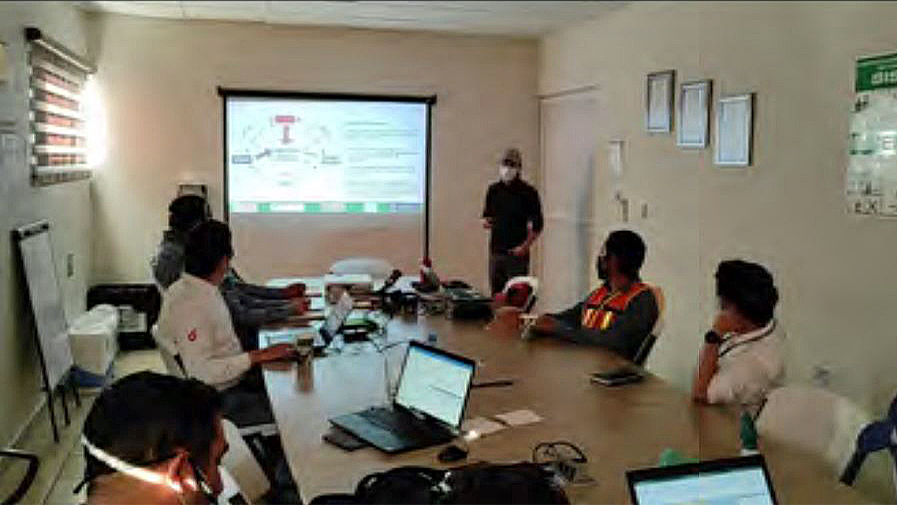
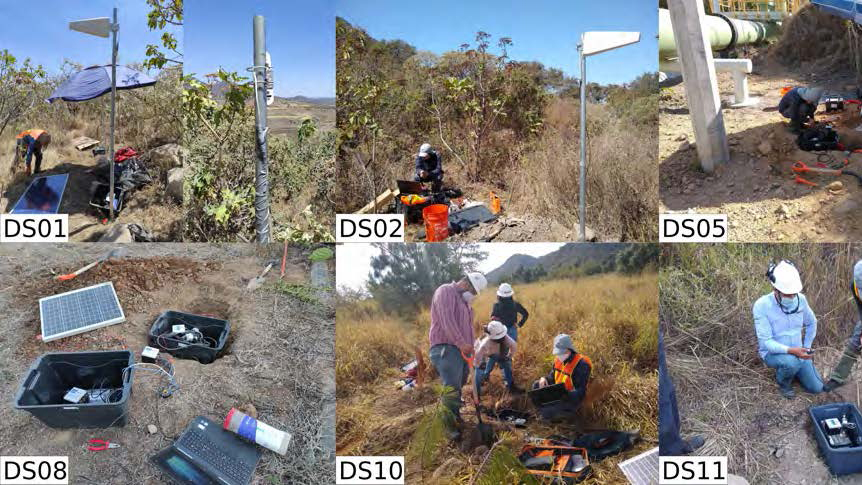
20 seismic measurement stations were installed and commissioned near and around the power station. In addition, two know-how transfer workshops were organised on site to operate the stations, capture and evaluate the data. An initial detailed interpretation of the measurement results has also been carried out.
The project is in its final phase and will be completed in 2024.